Ready to elevate your marketing game with Influencer Marketing?
Our team of experts will be happy to show you our influencer platform in action and discuss your individual needs and aspirations.



To raise awareness of Five Guys’ halal offer in France, Jin Agency bet on influencers who eat halal and whose audiences live near the restaurants involved. Three waves, twelve cities, and sales up in every restaurant targeted, by as much as 30%.
.webp)
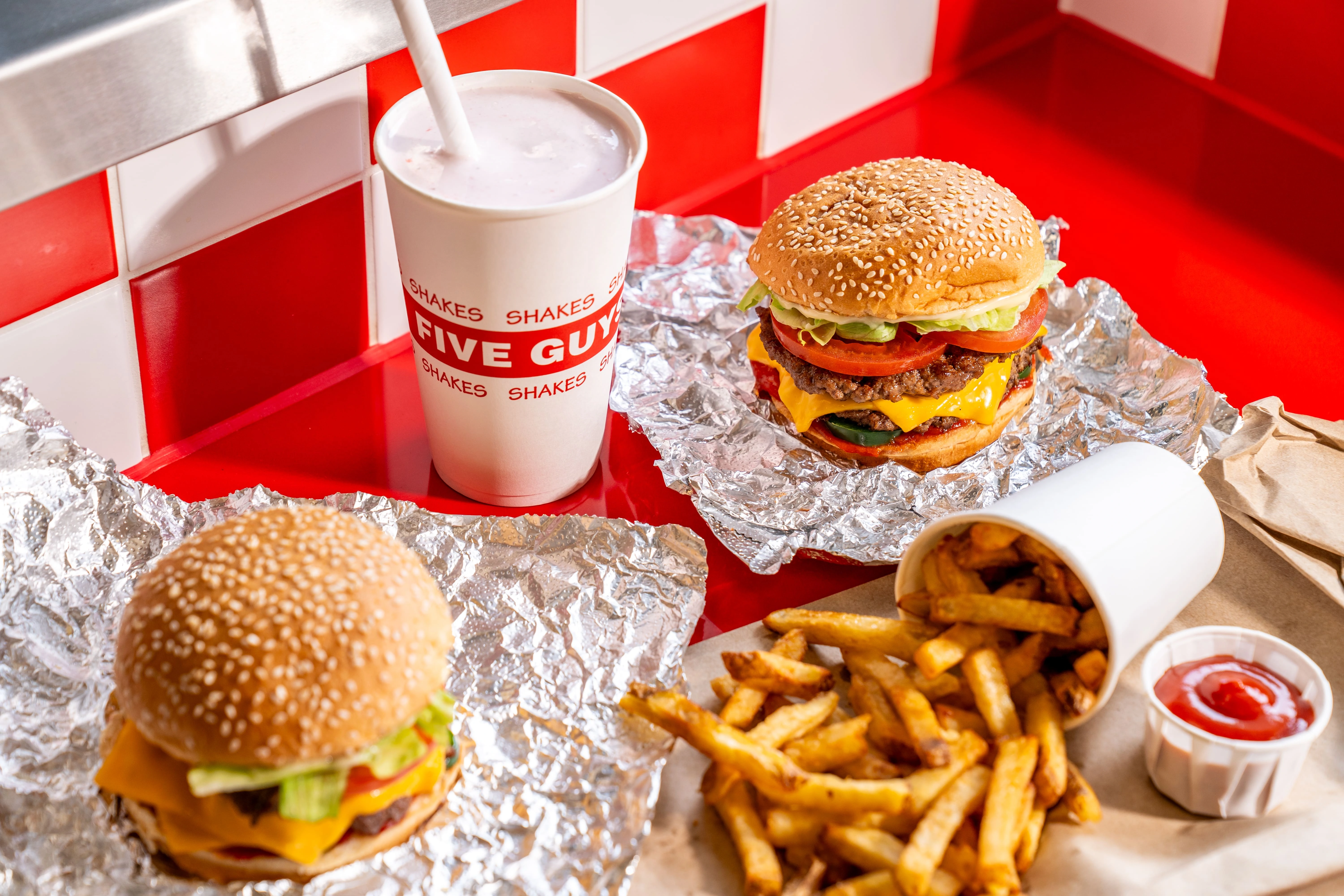
Five Guys was founded in 1986 in Arlington, Virginia, when Jerry and Janie Murrell offered their sons the chance to start a business instead of going to university. What started as a burger takeaway counter now has nearly 2,000 restaurants worldwide, although the recipe has barely changed: burgers made to order, hand-cut fries cooked in peanut oil, 15 free toppings, and more than 250,000 possible combinations.
Jin is an independent communications consultancy founded in 2012. Its 140-plus consultants cover influencer marketing, social media, public relations, and corporate affairs, supported by data teams. The agency holds AFNOR certification for its responsible influence practices.
Jin has worked with Five Guys for three years. Pauline Cugnart, account director, took over the account two years ago to bring the brand into influencer marketing.
Five Guys moves fast. Its kids’ menu, the first influencer campaign Jin ran for the brand, went from idea to restaurant in two weeks. The halal offer, already available in the UK, followed at the same pace.
The customer demand had been there for a long time. Jin, which also handles the brand’s community management, kept seeing the same messages. ‘We had comments saying: oh, I can’t come and have an ice cream because it’s not halal, and I’d really love to try it,’ Pauline explains.
That left explaining what the offer covers and what it doesn’t. In participating restaurants, the beef and hot dogs are halal. Bacon stays on the menu, cooked on a dedicated grill with its own utensils, the Five Guys bacon milkshake is not offered but alcohol is still served. So the offer can’t be certified halal, and Five Guys chose to say so. ‘We’d rather be honest,’ Pauline stresses.
The brand knew the offer wouldn’t appeal to people who eat strictly halal, but a large part of the community accepts halal meat in a restaurant that doesn’t follow every rule. There was another hurdle: many people know Five Guys by name but have never walked through the door, often because they’ve been told it’s expensive.
The campaign followed the phased rollout across the different restaurants. The halal offer launched first in five cities, then in five more, then in two others as demand was confirmed. Jin built its campaign around that schedule, in three successive waves.
The approach was the same at every stage. The agency contacted influencers who eat halal and live in the cities where a restaurant was switching to the halal offer. Their content was first published organically, then boosted as dark posts with precise targeting.
‘The goal was really to get big visibility,’ Pauline explains. That meant announcing the offer, but also explaining clearly what it does and doesn’t include.
Around 20 influencers were chosen on three criteria: legitimacy, geography, and exclusivity, all sourced and verified in Kolsquare. ‘What I like about Kolsquare is that it feels a bit more ahead of the curve in how it develops its data,’ says Pauline. ‘It sounds silly, but the platform looks really nice and it makes you want to work on it.’
Legitimacy, by keyword. ‘I absolutely needed influencers who eat halal so they’d have the legitimacy to speak on it,’ Pauline insists. Rather than starting from a name and then checking the audience, she ran a keyword search in Kolsquare. ‘I typed halal and it brought up halal content. I was able to find influencers who were already talking about halal restaurants or making halal recipes.’ Because the pool was limited at city level, Jin also selected a few profiles whose friends and family eat halal.
Geography, by audience. Each piece of content featured a specific restaurant, so Pauline checked the city breakdown of each profile’s audience in its Instagram data. ‘Sometimes I’d find 20% of the audience lived in Toulouse. Brilliant! We need people from Toulouse to come.’
Exclusivity, by content history. Any profile that had already worked with another fast-food chain was ruled out. Pauline went through their content in Kolsquare, looking for competitor brand names or simply the word ‘burger’.
Once casting was complete, the influencers were paid and given a detailed brief on this sensitive subject, but the creative was left to them. ‘They know their own audience,’ Pauline explains. ‘The brief is there to guide them. But in reality, the creative comes from them.’
Across the three waves, the campaign produced more than 20 pieces of content and passed one million impressions, with an engagement rate Pauline describes as ‘super high’.
For Five Guys, visibility was only one step. The goal was to turn anticipation into visits, and finally bring through the door customers who had long wanted to come but couldn’t.
So Jin isolated sales for the campaign period alone. ‘Those sales match the dates the organic content and then the sponsored posts went live. Not before and not after,’ she says.
Every restaurant measured saw growth, most of them in double digits. In Toulouse, sales rose by more than 15% over the period, and in Cannes the increase reached 30%.
Beyond the numbers, the campaign met a real demand: many customers could finally try something that had been off-limits to them until then. The roll-out keeps expanding, with two more restaurants switching to halal and a new influencer campaign in the works.
‘I think we’ll carry on like this because, as you can see, it’s working pretty well in terms of sales growth and visibility,’ Pauline concludes.
Five Guys’ halal campaign shows that a delicate launch depends on the credibility of the people talking about it and how close they are to the ground. By using Kolsquare data to check who is talking, about what, and to whom, Jin was able to link each piece of content to a restaurant, and each restaurant to its sales.
Want to find the right influencers, city by city? Request a Kolsquare demo
Your monthly dose of exclusive insights, strategies and trends shaping the creator economy. For insiders, by insiders.
L’essentiel, directement dans votre boîte mail.
.webp)

%20(1)%20(1).png)


.webp)